
Services
Bridges
Our custom dental bridges replace missing teeth, restoring your smile, bite, and confidence right here in Stuart.

Why choose us
Benefits of Bridges
Fill the Gap
We use a bridge to replace one or more missing teeth so your smile looks complete again.
Chew More Comfortably
Restoring missing teeth helps you bite and chew with more confidence.
Keep Teeth Aligned
Filling the space helps keep your neighboring teeth from drifting out of place.
Fixed, Not Removable
Unlike a removable partial denture, a bridge stays in place, so there's nothing to take out at night.
Flexible Payment Options
We accept all major PPO plans and self-pay patients, and we offer financing through CareCredit and Health Finance Direct.
A single missing tooth can quietly change how you chew, which side of your mouth you favor, and even how the neighboring teeth sit over time. Teeth on either side of a gap can drift or tilt toward the open space, and the tooth above or below it may have nothing to bite against. A dental bridge fills that gap with a replacement tooth anchored to the teeth beside it. At Family & Implant Dentistry of Stuart, we place bridges for teens and adults who want a fixed, natural-looking way to restore their smile and their bite.
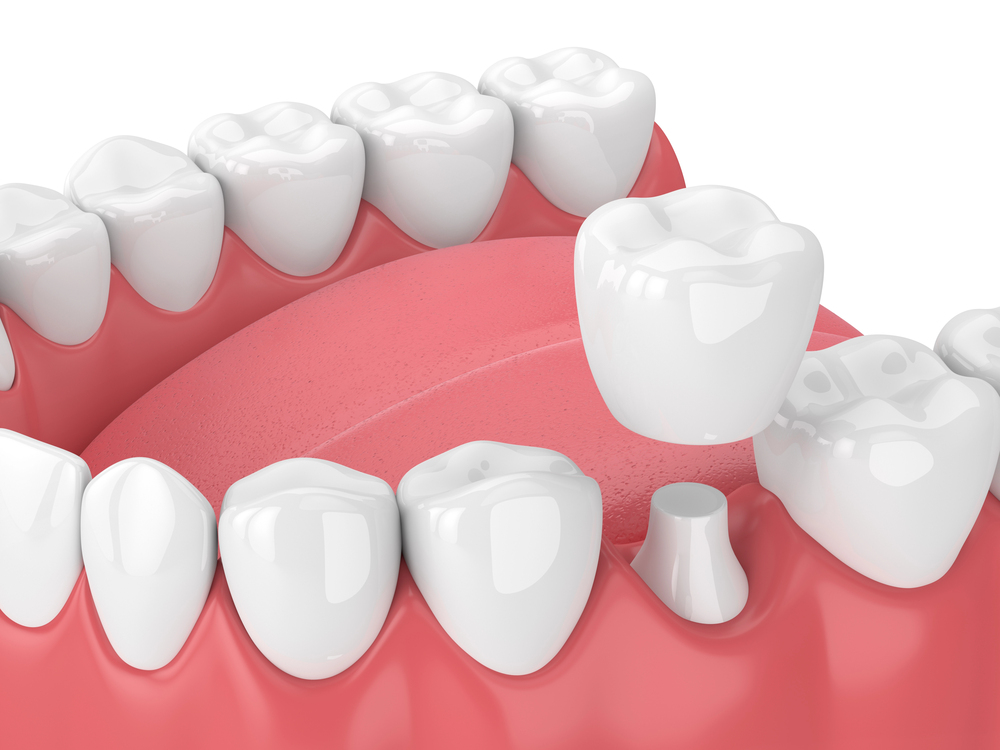
A traditional bridge is a single connected restoration made of three main parts. The replacement tooth, called a pontic, sits in the gap. On each side, a crown fits over the neighboring natural tooth, which we call an abutment. Because the crowns hold the pontic in place, the bridge stays fixed in your mouth. You don't take it out at night the way you would with a removable partial denture.
To make room for those crowns, we reshape the abutment teeth so the bridge can sit comfortably and line up with your bite. We then take impressions so the bridge can be custom made to match the size, shape, and shade of your surrounding teeth. While the final bridge is being made, you'll typically wear a temporary one. Once the permanent bridge is ready, we check the fit and bite before securing it in place.
Bridges help people in several situations. You might be a candidate if you've lost a tooth to decay, injury, or an extraction, or if you've been living with a gap for some time and are noticing changes in how you chew. Bridges are often a good fit when the teeth next to the gap are healthy enough to support crowns, or when those teeth already have large fillings and could benefit from being crowned anyway.
A bridge is one of several ways we replace teeth. Our office also offers dental implants, which we perform entirely in-house, as well as complete and partial dentures. Our dentists, Dr. Jordan Broaddus and Dr. Eleine Laffita, will walk you through the options that make sense for your mouth, your goals, and your budget.
Who is a good candidate for a dental bridge?
A good candidate for a bridge has one or more missing teeth, healthy gums, and strong neighboring teeth that can support the crowns. Before recommending a bridge, we start with a thorough dental exam to look at the teeth around the gap, your gum health, and your overall bite.
If we find signs of gum disease, we'll address that first. Our team provides gum disease treatment, including scaling and root planing, because healthy gums give a bridge a stable foundation. If an abutment tooth has deep decay or infection, we may recommend a filling or root canal therapy beforehand. Here are a few things we'll talk through with you:
- How many teeth are missing and where they are located
- The condition of the teeth on either side of the gap
- Your gum health and any history of gum disease
- Whether a bridge, implant, or partial denture best fits your needs
How do I care for my bridge after it's placed?
You care for a bridge much like your natural teeth, with daily brushing and flossing plus regular checkups. The key difference is cleaning underneath the pontic, where food and plaque can collect between the bridge and your gums.
During your visit, our dental hygienist can show you how to clean under and around the bridge so the supporting teeth and gums stay healthy. Because the crowns rely on your natural teeth for support, protecting those abutment teeth from decay is one of the most important parts of keeping your bridge in good shape. Routine dental cleanings and exams let us check the bridge, the surrounding gums, and your bite at every visit. If something ever feels loose, cracked, or uncomfortable, let us know. We offer same-day emergency appointments and walk-ins, so you don't have to wait long for help.
How can I pay for a dental bridge?
We accept all major PPO insurance plans, and many plans include some coverage for restorative care such as bridges. Our team can help you understand how your benefits apply before treatment begins, so you know what to expect.
We also welcome self-pay patients. If you'd like to spread the cost over time, we offer financing through CareCredit and Health Finance Direct. We're glad to talk through these options during your consultation so cost doesn't keep you from restoring your smile.
How do I schedule a bridge consultation in Stuart?
You can schedule a consultation by contacting our office. We'll start with an exam, talk about your goals, and help you decide whether a bridge is the right choice. Our team offers Spanish-speaking care, and Saturday hours make it easier to fit a visit into a busy week.
If a missing tooth has been on your mind, we'd love to help you take the next step. Reach out to Family & Implant Dentistry of Stuart today, and let's talk about restoring your smile with a bridge designed to fit you.
The process
What to expect
- 1
Exam and Planning
We examine your teeth and gums and talk through whether a bridge, implant, or denture best fits your needs.
- 2
Preparing and Placing
Our team prepares the supporting teeth and fits your bridge so it feels comfortable and natural.
- 3
Ongoing Care
Regular cleanings and exams with our hygienist help keep your bridge and the teeth around it healthy.
Questions
Bridges FAQs
Does insurance cover dental bridges?
Many PPO plans include some coverage for bridges, and we accept all major PPO insurance plans. Your exact benefits depend on your plan, so our team is happy to help you understand what applies to you. We also welcome self-pay patients and offer financing through CareCredit and Health Finance Direct.
Does getting a bridge hurt?
Most patients find getting a bridge more comfortable than they expected, because we numb the area before preparing the supporting teeth. If you feel nervous about dental visits, ask us about nitrous oxide sedation to help you relax. Our team checks in with you throughout your visit so you always know what is happening.
How long does it take to get a dental bridge?
A traditional bridge usually takes more than one visit. We first prepare the neighboring teeth and take impressions, and then we place your finished bridge at a later appointment. We will walk you through the timeline that fits your specific situation during your consultation.
How long does a dental bridge last?
With good care, a bridge can serve you well for many years, though how long it lasts varies from person to person. Brushing, cleaning under the bridge, and keeping up with regular cleanings and exams all help protect it and the teeth that support it. At your checkups, we will look at your bridge and let you know if anything needs attention.
Is a bridge my only option for replacing a missing tooth?
No, a bridge is one of several tooth replacement options we offer. Depending on your needs, we may also talk with you about dental implants, which we place entirely in-house, or about partial or complete dentures. Dr. Broaddus or Dr. Laffita will examine your smile and help you compare the choices so you can decide what feels right for you.