
Services
Restorative Dentistry
We repair and rebuild damaged or missing teeth with fillings, crowns, bridges, dentures, and implants placed in-house.

Why choose us
Benefits of Restorative Dentistry
Implants Done In-House
We place dental implants right here in our office, so you don't need to visit another location for your care.
Many Repair Options
From fillings and crowns to bridges, dentures, and root canal therapy, we can match the repair to your needs.
Prompt Help When Needed
We offer same-day emergency appointments, walk-ins, and Saturday hours when a broken or painful tooth can't wait.
Comfort-Focused Care
Nitrous oxide sedation is available to help you feel more relaxed during your treatment.
Flexible Ways to Pay
We accept all major PPO plans and self-pay patients, and we offer financing through CareCredit and Health Finance Direct.
If a tooth has started to ache when you bite down, a filling has cracked, or a gap has opened where a tooth used to be, you are probably wondering what comes next and how much of your smile can be saved. At Family & Implant Dentistry of Stuart, restorative dentistry focuses on repairing damaged teeth and replacing missing ones so you can chew, speak, and smile comfortably again. We care for teens and adults throughout Stuart, FL, and we handle everything from small fillings to dental implants under one roof.
Restorative dentistry is the branch of dental care that rebuilds what decay, injury, wear, or tooth loss has taken away. It helps people with a single cavity and people missing several teeth, along with everyone in between. The goal is the same in every case: restore function first, then make sure the result fits naturally with the rest of your smile.
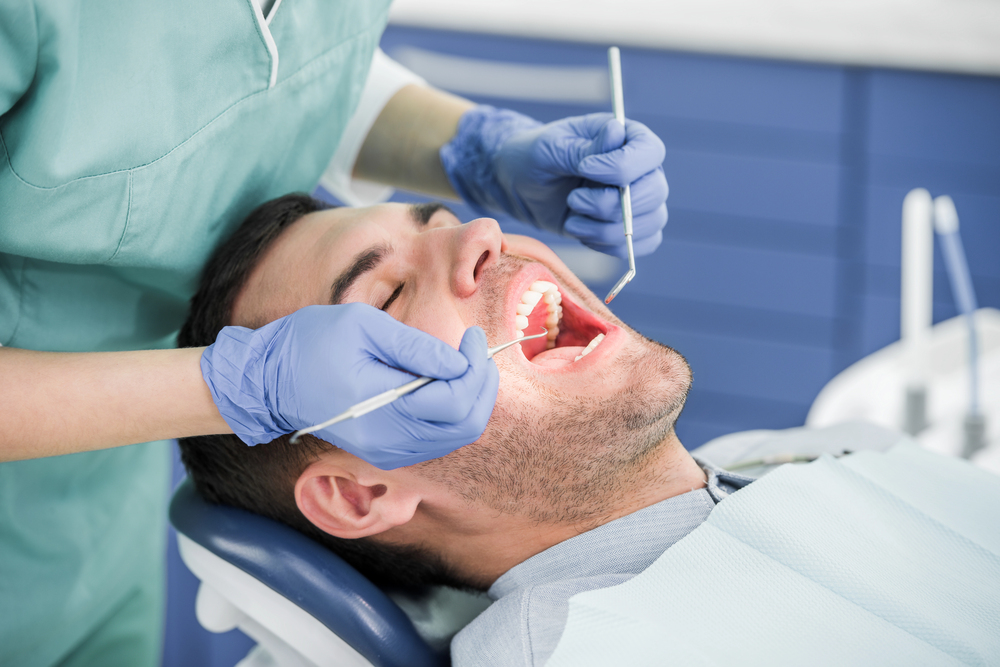
Your first visit starts with a thorough dental exam. Dr. Jordan Broaddus, DMD, or Dr. Eleine Laffita looks at the affected tooth, checks the surrounding teeth and gums, and talks with you about what you are feeling. Many restorative problems connect to other issues. For example, gum disease can loosen teeth, and an old filling can hide new decay underneath. We look at the full picture before recommending anything, and we explain your options in plain terms so you can decide with confidence.
The right restoration depends on how much healthy tooth structure remains. A small area of decay is usually repaired with a dental filling. When a tooth is cracked, heavily filled, or weakened, a crown covers and protects it. If infection has reached the inner part of the tooth, root canal therapy may save it. We provide root canal treatment for front teeth, premolars, and molars.
When a tooth cannot be saved, we may recommend a simple extraction. After that, we discuss how to replace the tooth. Options include bridges, partial or complete dentures, and dental implants. We perform implant treatment entirely in-house, so you do not need to coordinate visits across different offices. If you are anxious about treatment, we also offer nitrous oxide sedation to help you feel more relaxed in the chair.
Who is a good candidate for restorative dentistry?
Most teens and adults with damaged, decayed, or missing teeth are candidates for some form of restorative care. The specific treatment that suits you depends on your oral health, the condition of your gums and bone, and your personal priorities.
A few factors are worth knowing ahead of time. Healthy gums matter, so if we find signs of gum disease, we may recommend treatment such as scaling and root planing before placing a restoration. Patients considering implants or bridges should expect a conversation about the neighboring teeth and supporting structures. Timing also matters. A small cavity treated early often needs only a filling, while the same cavity left alone may later require a crown or root canal. If something hurts or breaks suddenly, we offer same-day emergency appointments and accept walk-ins, so you do not have to wait in discomfort.
How do I care for my teeth after a restoration?
Restorations are cared for much like natural teeth, with consistent daily habits and regular professional visits. Your dentist will give you instructions specific to your treatment, and our dental hygienist will help you keep the area clean and healthy over time.
Some habits apply to nearly every restoration:
- Brush twice daily and clean between teeth, including around crowns, bridges, and implants.
- Follow any temporary diet guidance your dentist gives you after treatment.
- Keep your routine cleanings and exams so we can monitor your restorations.
- Call us promptly if a restoration feels loose, rough, or uncomfortable.
How long a restoration serves you depends on the type of work, your habits, and your overall oral health. Routine dental cleanings, periodontal maintenance when needed, and oral cancer screenings at checkups help us catch small concerns early, before they affect the work you have invested in.
How can I pay for restorative dental treatment?
We accept all major PPO insurance plans, and we welcome self-pay patients. Before treatment begins, we review your plan with you so you understand what to expect.
For larger treatment plans, such as implants or multiple crowns, financing can make care more manageable. We offer CareCredit and Health Finance Direct, which let you spread costs over time instead of postponing treatment you need. Our team can explain how each option works and help you choose the one that fits your situation.
If a tooth has been bothering you, or you are ready to replace one that is missing, we are here to help. Our office offers Saturday hours and Spanish-speaking care, so it is easier to find a time that works for you and to communicate comfortably. Contact Family & Implant Dentistry of Stuart to schedule your visit, and let us help you get back to eating, talking, and smiling with confidence.
The process
What to expect
- 1
Exam and Consultation
We examine your teeth, talk with you about your concerns, and explain your restorative options in plain language.
- 2
Personalized Treatment
Our dentists restore your smile with the filling, crown, bridge, denture, implant, or root canal therapy you choose together with us.
- 3
Ongoing Aftercare
We help you protect your results with regular cleanings, exams, and guidance on caring for your restored teeth.
Questions
Restorative Dentistry FAQs
Does insurance cover restorative dentistry, and how can I pay for it?
We accept all major PPO insurance plans, and many plans include benefits for restorative care such as fillings, crowns, and bridges. If you don't have insurance, we welcome self-pay patients, and we offer financing through CareCredit and Health Finance Direct. Our team is happy to review your options with you before treatment begins.
Will getting a filling, crown, or other restoration hurt?
Most patients are surprised by how comfortable restorative treatment can be, because we numb the area before we begin. For patients who feel nervous, we also offer nitrous oxide sedation to help you relax during your visit. Let us know about any concerns, and we'll go at a pace that feels right for you.
How long does restorative treatment take?
It depends on the type of restoration you need, since a simple filling is usually quicker than a crown, bridge, or dental implant. During your exam, we'll explain what your treatment involves and how many visits to expect. That way, you can plan ahead with a clear picture of your care.
How long will my restoration last?
How long a restoration lasts varies from person to person and depends on the type of treatment, your daily oral care, and habits like grinding or chewing hard foods. Regular dental exams and cleanings let us check your fillings, crowns, bridges, dentures, and implants over time. If a restoration ever needs attention, we can talk with you about repair or replacement.
Am I a good candidate for restorative dentistry, and what are my options?
If you have a cavity, a cracked or damaged tooth, or missing teeth, restorative dentistry may help, and we see teens and adults in our office. Depending on your needs, options can include fillings, crowns, root canal therapy, bridges, complete or partial dentures, and dental implants, which we place entirely in-house. We'll examine your smile and walk you through the choices that fit your situation.